Face Shape Style Formulas: Complete Hair, Makeup & Accessory Guide
Have you ever spent hours trying to replicate a celebrity's hairstyle or a trendy makeup look, only to find it doesn't quite work for you? You're not alone. The secret often isn't about skill, but about science. The key lies in understanding your unique face shape and how its proportions interact with different styling elements. What if you had a formula to create a look that always felt right?
This guide is your go-to resource for creating a cohesive style. We'll explore the perfect formulas for harmonizing hairstyles, makeup techniques, and accessories based on your specific facial structure. Before you can apply these formulas, you need to know your starting point. Accurately identifying your face shape is the first step, and our free AI face shape detector is the perfect tool for the job.
Understanding Your Face Shape as a Styling Canvas
Your face shape is the foundation of your personal style. It’s not about labeling yourself or fitting into a rigid box; instead, think of it as your unique canvas. Understanding its structure allows you to make intentional choices that highlight your best features, create balance, and express your personality with confidence.
Key Facial Features That Define Your Shape
Determining your face shape involves looking at a few key measurements and contours. The primary factors include the width of your forehead, cheekbones, and jawline, as well as the overall length of your face. Is your jawline sharp and angular, or soft and rounded? Are your cheekbones the widest part of your face? These details are what distinguish one shape from another.
The Science of Facial Proportions in Styling
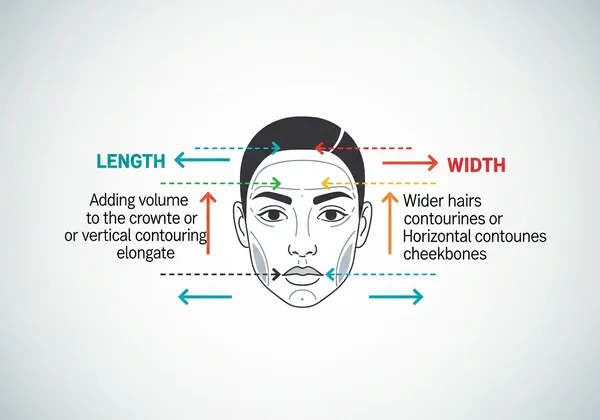
Styling is all about creating optical illusions. The goal is to use hair, makeup, and accessories to create an impression of balance and symmetry, often drawing the eye toward the classic oval shape. For example, a style that adds volume at the sides can make a long face appear wider, while a hairstyle with height at the crown can elongate a round face. It’s a game of lines, angles, and volume designed to flatter your natural canvas.
The Complete Face Shape Style Formulas
Once you know your face shape, you can start applying specific formulas to build your look. Remember, these are guidelines, not strict rules. The best style is one that makes you feel confident and authentic. If you're unsure of your shape, a face shape analysis tool can provide a clear and objective starting point.
Oblong Face Shape: Creating Balanced Proportions
An oblong face is longer than it is wide, with a straight cheek line. The goal is to add width and reduce the appearance of length.
- Hairstyles: Opt for styles with volume on the sides. Wavy or curly bobs, shoulder-length cuts with layers, and bangs (especially curtain or blunt bangs) work beautifully to create horizontal lines.
- Makeup: Apply blush horizontally on the apples of your cheeks and blend it outwards towards your ears. Avoid vertical contouring along the sides of your face.
- Accessories: Choose wider earrings like hoops or studs. Short, statement necklaces help draw the eye down without adding more length. Wide-brimmed hats are also an excellent choice.
Oval Face Shape: Enhancing Natural Symmetry
Considered the most versatile, an oval face has balanced proportions with a forehead slightly wider than a gently curved chin. Almost any style works, so the focus is on showcasing your features.
- Hairstyles: You can pull off nearly anything, from a short pixie cut to long, flowing layers. The key is to avoid styles that add too much height at the crown or cover your balanced features.
- Makeup: Follow the natural contours of your face. A light touch of highlighter on the high points (cheekbones, brow bone) and a sweep of blush on the apples of your cheeks are all you need.
- Accessories: Your options are limitless. Experiment with different earring lengths, necklace styles, and eyeglass frames to express your personal taste.
Square Face Shape: Softening Strong Angles
A square face is characterized by a strong, angular jawline and a forehead and jaw of similar width. The styling formula aims to soften these angles.
- Hairstyles: Wavy styles, long layers, and side parts are fantastic for adding softness. Curls and textures that fall around the jawline can beautifully diffuse sharp corners.
- Makeup: Use contouring to soften the corners of your forehead and jaw. Apply blush in a circular motion on the apples of your cheeks to add roundness.
- Accessories: Opt for round or oval-shaped accessories. Hoop earrings, delicate drop earrings, and necklaces with pendants can create curves and soften your features. Cat-eye or round glasses are a great fit.
Round Face Shape: Adding Definition and Structure
A round face has similar width and length, with soft curves and full cheeks. The goal is to create angles and add the illusion of length.
- Hairstyles: Styles that add height at the crown are ideal. Long, straight hair, asymmetrical bobs, and deep side parts help elongate the face. Avoid chin-length bobs with rounded lines.
- Makeup: Contour along the sides of your face and under your cheekbones to create more definition. Apply blush at an upward angle towards your temples.
- Accessories: Choose long, dangling earrings and V-shaped necklaces to create vertical lines. Angular and rectangular glasses frames add structure.
Diamond Face Shape: Balancing Width and Length
Diamond faces are widest at the cheekbones, with a narrower forehead and chin. The formula focuses on softening the cheekbones and adding fullness to the chin and forehead areas.
- Hairstyles: Medium-length cuts, soft chin-length bobs, and hairstyles that tuck behind the ears work well to showcase your amazing cheekbones. Side-swept bangs can soften the forehead.
- Makeup: Apply blush slightly below the apples of your cheeks and blend upwards. Use highlighter sparingly on the cheekbones to avoid overemphasizing their width.
- Accessories: Earrings that are wider at the bottom, like teardrops, can add balance. Delicate necklaces are a great choice. Look for glasses with details on the top, like browline or cat-eye frames.
Heart Face Shape: Creating Facial Harmony
A heart-shaped face features a wider forehead and a narrower, pointed chin. The objective is to create balance by adding volume to the lower half of the face.
- Hairstyles: Shoulder-length hair with layers or waves that start from the chin down is perfect. A side part can also help balance the width of the forehead.
- Makeup: Contour the sides of your forehead and temples. Apply blush and highlighter on and below the apples of your cheeks to draw attention downwards.
- Accessories: Choose earrings that are wider at the bottom, such as triangle or teardrop shapes. Shorter necklaces help fill the space above the chin. Bottom-heavy glass frames also work well.
Creating Harmonized Looks: Styling Element Combinations
The real magic happens when you combine these elements to create a harmonious look. A great hairstyle can be enhanced by the right makeup, and the perfect pair of earrings can tie everything together. This holistic approach ensures every part of your style works in concert.
Hairstyle and Makeup Synergy
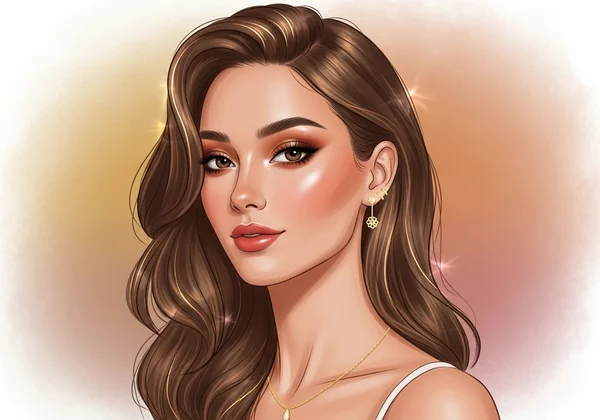
Think of your hair and makeup as a team. If you choose a hairstyle that pulls your hair away from your face (like a sleek ponytail), you have a great opportunity to play with a bold makeup look. Conversely, if you have heavy bangs and lots of texture around your face, a simpler makeup approach might feel more balanced and prevent the look from becoming too busy.
Accessory Pairing Strategies for Each Face Shape
Accessories are the finishing touch. For a square face, pairing a soft, wavy hairstyle with round hoop earrings creates a beautiful contrast that softens your overall look. For a round face, combining a hairstyle with volume at the crown with long, linear earrings doubles down on the elongating effect. The goal is to ensure your accessories support the "formula" you've chosen.
Seasonal Adaptations of Face Shape Formulas
Your style formulas can adapt to the seasons. In summer, a wide-brimmed hat not only provides sun protection but can also be chosen to balance an oblong face shape. In winter, a stylish beanie can be worn further back on the head to avoid shortening a round face, while a chunky scarf can help add width to the jawline of a heart-shaped face.
Your Journey to Confident, Face-Shape Optimized Style
Once you understand your face shape, you unlock the secret to effortless style. Suddenly, fashion isn't a guessing game—it becomes your personal creative toolkit. Armed with this knowledge, you can confidently choose hairstyles, makeup, and accessories that highlight your best features and express your unique personality.
This knowledge isn't about conforming to rules, but about having the tools to confidently express yourself. By learning the science of proportions, you can create balanced, harmonious looks for any occasion. The key is to start with an accurate understanding of your canvas.
Ready to find your foundation? Try it today and unlock styling recommendations tailored to your unique facial structure.
The Takeaway
What if I don't fit perfectly into one face shape category?
Many people are a combination of two shapes, such as a square jawline with the length of an oblong face. In this case, identify your dominant features and borrow styling tips from both categories. An accurate face shape detector can help clarify which shape is most prominent.
Can these style formulas work for all hair types and textures?
Absolutely. The principles of adding volume, creating angles, or softening lines apply to all hair types. To add width for an oblong face, curly-haired individuals should focus on layered cuts that enhance natural side volume. For those with straight hair, using waves or a blow-dry technique can achieve similar results.
How do face shape formulas account for personal style preferences?
These formulas are a guide, not a uniform. Think of them as a framework you can adapt to your personal aesthetic. If you have a round face but prefer short hair, consider a textured pixie cut with height at the top instead of a rounded bob. The goal is to use the principles to enhance a look you already love.
Are there any styling elements that universally work for all face shapes?
While most elements are shape-specific, a few things are broadly flattering. A well-maintained eyebrow shape that follows your natural arch frames the face beautifully for everyone. Similarly, a touch of highlighter on the top of the cheekbones adds a healthy glow to any face shape.
How often should I reassess my face shape styling approach?
Your face shape itself won't change dramatically, but your style, hair texture, and even weight can. When planning significant style changes—such as a new haircut or new glasses—it's worth reassessing your approach. This ensures your choices continue to flatter you as you evolve.