Men's Face Shapes: The Ultimate Styling Guide
Have you ever walked out of a barbershop feeling like your new haircut just doesn't look right? You might have shown the barber a photo of a celebrity, but the result on your own head felt "off." This is a common problem for many men. Usually, the reason is simple: the style didn't match your specific facial structure.
Understanding the unique angles of your head is the secret to looking your best. It serves as the foundation for every grooming decision you make. This includes everything from the length of your hair to the shape of your glasses. What face shape do I have? Answering this question is the first step toward building a personal style that highlights your best features.
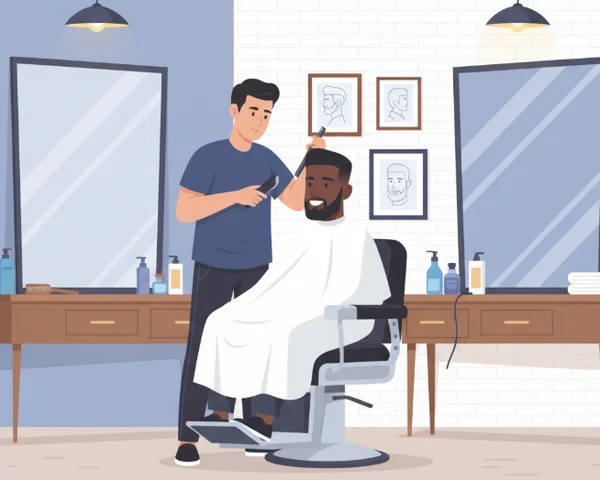
In this guide, we break down the six most common male face shapes. We also provide professional styling advice for each. Whether you want a sharper jawline or a more balanced forehead, knowing your proportions is key. Before you dive into the details, you can identify your face shape using our advanced AI tool to get an accurate starting point.
Understanding Face Shapes: The Foundation of Great Style
Your style is an expression of geometry and balance. When you understand the angles of your face, you can choose styles that create a balanced appearance. In traditional grooming, the "oval" look is often considered the most symmetrical and balanced goal.
By identifying your specific shape, you stop guessing and start making informed choices. This saves you time and money. You will no longer buy accessories or get haircuts that don't suit your bone structure. It is the most practical way to improve your overall appearance quickly and effectively.
How to Determine Your Face Shape
Traditionally, men were told to stand in front of a mirror and trace their face outline with soap. While this can work, it is often inaccurate due to lighting or head tilt. Another method involves using a measuring tape. You would find the width of your forehead, cheekbones, and jawline, along with the total face length.
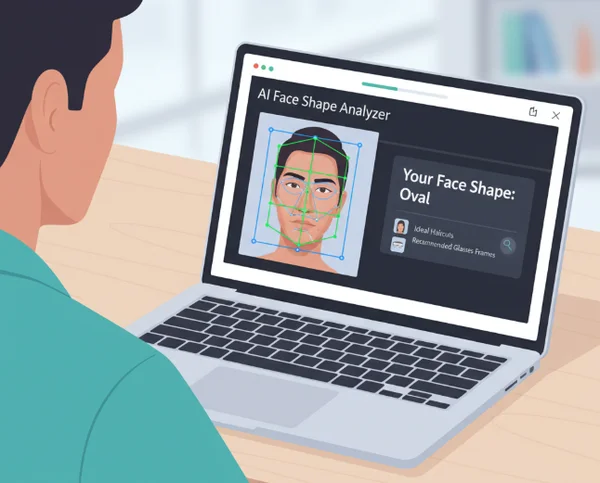
However, the easiest and most modern way to find the truth is to use technology. You can try our free tool which uses AI to analyze your facial points instantly. All you need to do is upload a clear, front-facing photo. Our AI looks at your proportions and gives you a result in seconds. This ensures you have a solid foundation for the styling tips below.
The Six Male Face Shapes: Characteristics and Considerations
In the world of men's grooming, we generally categorize faces into six distinct types:
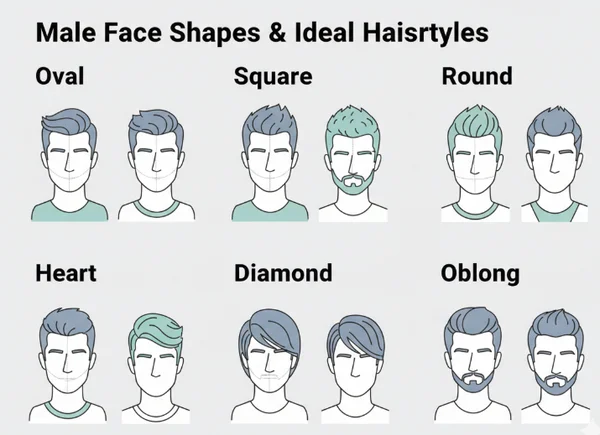
- Oval: The face length is longer than the width of the cheekbones. The forehead is usually wider than the jawline.
- Square: All measurements are quite similar. The jaw is sharp, wide, and angular rather than rounded.
- Round: Cheekbones and face length have a similar measurement. They are larger than the forehead and jawline.
- Heart: This shape features a wide forehead and a narrow, significantly pointed chin.
- Diamond: A long face shape with wide cheekbones and a narrow forehead and jawline.
- Oblong: The face is significantly longer than it is wide, often with a tall forehead and long chin.
Each of these shapes has unique strengths. The goal of styling is to play to those strengths. You want to add "visual weight" where it is missing to create harmony across your features.
Hairstyles That Complement Your Face Shape
Your hair is your most prominent accessory. The right cut can make a round face look slimmer or a long face look more balanced. Here is how you can choose a hairstyle based on your specific facial structure.
Best Hairstyles for Oval Faces: Enhancing Natural Balance
If you have an oval face, you are in luck. This shape is widely considered the most versatile of all. Because your features are naturally balanced, most hairstyles will look good on you. Your goal is to keep the hair off your forehead to show off your natural proportions.
Top picks include the classic undercut, a slicked-back look, or a pompadour. Avoid heavy fringes or bangs that cover your forehead. These can make your face look rounder than it actually is. You have the freedom to experiment, so feel free to start your test to confirm you are truly an oval before trying a bold new cut.
Square Face Hairstyles: Softening Strong Jawlines
A square face is characterized by a strong, masculine jawline. This is a great trait, but the wrong haircut can make you look too "boxy." To balance this, you should look for styles that add height or soften the corners of your face.
Consider a classic side part or a crew cut. If you prefer longer hair, a messy quiff adds volume on top. This draws the eye upward and elongates the look. Avoid center parts, as they emphasize the squareness of the forehead. Keep the sides relatively short while maintaining volume on top.
Round Face Hairstyles: Creating Definition and Length
For men with round faces, the goal is to create the illusion of height and angles. Since your face lacks sharp lines, your hair needs to provide them. Your style should provide the structure that your bone shape does not naturally have.
Aim for hairstyles that are "short on the sides and tall on the top." A high fade with a quiff or an asymmetrical fringe works wonders. These styles elongate the face and create a more "v-shaped" profile. Avoid buzz cuts or very short fringe. These will only highlight the roundness of your head.
Heart Face Hairstyles: Balancing Wider Foreheads
The heart-shaped face is wider at the temples and narrow at the chin. The most flattering hairstyle for this shape adds width to the forehead while balancing the chin. You want to avoid making the top of your head look too heavy.
Medium-length hair works best for you. A swept-back fringe or a natural part can work well. You should also consider styles that add volume to the bottom half of the hair. Avoid very short, tight fades that make the forehead look even wider than it is.
Diamond Face Hairstyles: Highlighting Cheekbones
Diamond faces are wider at the cheekbones but narrow at the forehead and jaw. Your goal is to add width to your forehead and jawline to balance the face. This creates a more oval appearance by filling in the narrower areas.
Fringes are a diamond face's best friend. A messy fringe or layered hair adds bulk where it is needed most. Don't go too short on the sides. Doing so will make your cheekbones look even wider. Instead, keep the sides a bit longer and fuller to soften the transition.
Oblong Face Hairstyles: Creating Facial Width
The oblong face shape is long and narrow. Your main styling goal is to avoid making the face look even longer. You should avoid any hairstyles that add significant height on top, as this creates an unnatural vertical line.
Instead, look for short to medium-length hair with a side part or a flat top. A classic buzz cut or a crew cut also works well. These styles help to "cut" the length of your face. You can see your results and confirm your face shape before choosing a cut that could potentially make your face look too long.
Facial Hair and Face Shape: Finding Your Perfect Beard Style
A beard is a powerful tool to reshape your face without a haircut. If you have a weak chin or a round jaw, a well-groomed beard can create the illusion of a more masculine structure. Facial hair allows you to "sculpt" your appearance manually. By keeping certain areas long and others short, you can adjust your proportions to your liking.
Beard Styles for Square Faces: Accentuating Your Strong Features
If you have a square face, you already have a great jawline. You can choose to highlight it or soften it. A short beard with trimmed sides will emphasize your bone structure. This creates a very clean, professional look.
If you want to soften the look, a Goatee or a rounded beard can take away some of the sharpness. Avoid keeping the beard too thick on the sides. This will only make your face look wider and more boxy.
Beard Styles for Round Faces: Creating Angular Definition
Beards are a game-changer for round faces. You can use facial hair to create the "angles" your face naturally lacks. This helps define the transition between your neck and your chin.
Grow a longer beard on the chin and keep the sides very short. This creates an oval or angular shape. A Pointed Beard or a Van Dyke style works perfectly. This draws the eye downward, making your face appear longer and leaner than it is.
Beard Styles for Oval Faces: The Versatile Canvas
Much like with haircuts, oval faces can pull off almost any beard style. Whether it's a simple stubble, a full beard, or a well-groomed mustache, you can't go wrong. You have the flexibility to follow any trend you find interesting.
The only rule is to keep it neat. Don't let your beard get too long on the bottom. It could ruin the natural balance of your oval shape. Check your shape with our AI face detector to see if an oval face gives you the freedom to experiment.
Beard Styles for Heart and Diamond Faces: Balancing Your Features
For heart and diamond shapes, the chin is often narrow. A full beard is an excellent way to add bulk to the lower half of the face. It fills in the space around the jaw, creating a sturdier appearance.
By growing a thicker beard around the jaw and chin, you balance out a wider forehead. Avoid pointed beards, as they will only emphasize the narrowness of your chin. A boxed beard is a great choice here to add much-needed width.
Beard Styles for Oblong Faces: Creating Facial Width
For an oblong face, you want a beard that adds width to the sides rather than length to the bottom. You want to avoid a "tapered" look that points downward.
Try thick mutton chops or a full beard that is trimmed short at the chin. Keep it fuller on the cheeks to make your face look wider and more balanced. Never grow a long, pointed beard, as it will make your face look unnaturally long.
Eyewear and Accessories: Enhancing Your Face Shape
Accessories are often the finishing touch to a great look. Glasses, hats, and even jewelry should be chosen based on your face shape. This creates harmony in your overall appearance and ensures your accessories don't overwhelm your features.
Choosing Glasses by Face Shape: The Complete Guide
The golden rule for choosing glasses is "opposites attract." If you have a round face, you want angular glasses. If you have a square face, you want rounded glasses. This contrast creates the balance you are looking for.
- Round Face: Go for rectangular or square frames. They add much-needed definition and sharpness.
- Square Face: Choose round or oval frames to soften your strong jawline.
- Oval Face: You can wear almost any frame, but rectangular frames often look the most balanced.
- Oblong Face: Look for tall frames with decorative temples to add visual width to the face.
- Heart/Diamond Face: Rimless or oval glasses work best to avoid adding more width to the top of the face.
Sunglasses Styles for Every Face Type
Sunglasses follow the same rules as regular glasses, but you can be more daring. Aviators look great on square and heart shapes because of their teardrop design. Wayfarers are a classic choice for round and oval faces because of their angular structure.
Before you buy an expensive pair of designer shades, make sure you check your shape. This ensures your investment actually enhances your look rather than hiding your best features behind the wrong frames.
Hats and Face Shape: Finding Your Perfect Match
Hats are often overlooked, but they also interact with your face shape. The right hat can balance a long face or add height to a round one.
- Round Face: Avoid small, round hats. Go for a Fedora or a structured baseball cap that adds height.
- Oblong Face: Avoid hats with high crowns. Choose a low-profile cap or a hat with a wider brim.
- Square/Oval Face: You can pull off most hats, but a beanie or a classic flat cap looks particularly good.
Your Personal Style Evolution
Your personal style evolves as you do. Think of it as an ongoing exploration rather than a final destination. By understanding the geometry of your face, you take the guesswork out of grooming and fashion. You can now walk into any barbershop or store with the confidence that you know exactly what works for your features.
Keep these three key takeaways in mind:
- Identify your shape first: Use a free online tool to get an accurate analysis before changing your look.
- Use contrast: Choose hairstyles and accessories that provide the opposite of your natural shape.
- Balance is the goal: Everything from your beard to your hat should work together to create a balanced appearance.
Don't leave your look to chance. Whether you are a style explorer looking for a new trend or a practical decision maker who wants to look professional, knowing your face shape is your most effective tool. Ready to transform your look? Click here to discover your unique face shape with our AI detector and start your styling journey today!
The Takeaway
Ever wonder why a hairstyle looks great on one person but not another?
Your face shape plays a bigger role than you might think. A hairstyle is essentially a frame for your face. If the frame is the wrong shape or size, the whole "picture" looks unbalanced. For example, a round haircut on a round face will make you look more circular. In contrast, an angular cut can make you look leaner and more masculine. Knowing your shape helps you choose a "frame" that highlights your best features.
What if I have features of multiple face shapes?
It is very common for men to have a "hybrid" face shape. For example, you might have a square jaw but a long forehead. This makes you a mix of square and oblong. In this case, you should follow the styling tips for the most dominant feature you want to balance. If you are unsure, using an AI analyzer can give you a "primary" result to focus on for your styling.
Are there certain face shapes that should avoid specific beard styles?
Yes. As a general rule, men with oblong faces should avoid long, pointed beards. These make the face look too narrow and long. Men with round faces should avoid bushy beards on the cheeks, which can make the face look wider. Remember that contrast is key: you want to add length to round faces and width to long faces.
How often should I reassess my face shape for styling purposes?
Your face shape can change slightly over time due to age, weight loss, or weight gain. It is a good idea to re-test your shape once every couple of years. You should also reassess after any significant change in your weight. This ensures your hairstyles and eyewear choices remain accurate as your features evolve over time.